The Tour of Flanders has been the main race of the season in Belgium since its creation in 1913.
Naturally, the reputational challenge of this race is on par with the renown of Liège-Bastogne-Liège, nicknamed “La Doyenne,” but the latter takes place in Wallonia.
Cycling is a very popular mode of transport in Belgium, due to its small size and urban density. Unlike France, which modernized its roads, particularly after the two world wars, the Belgian network largely consists of “narrow, cobbled roads.”
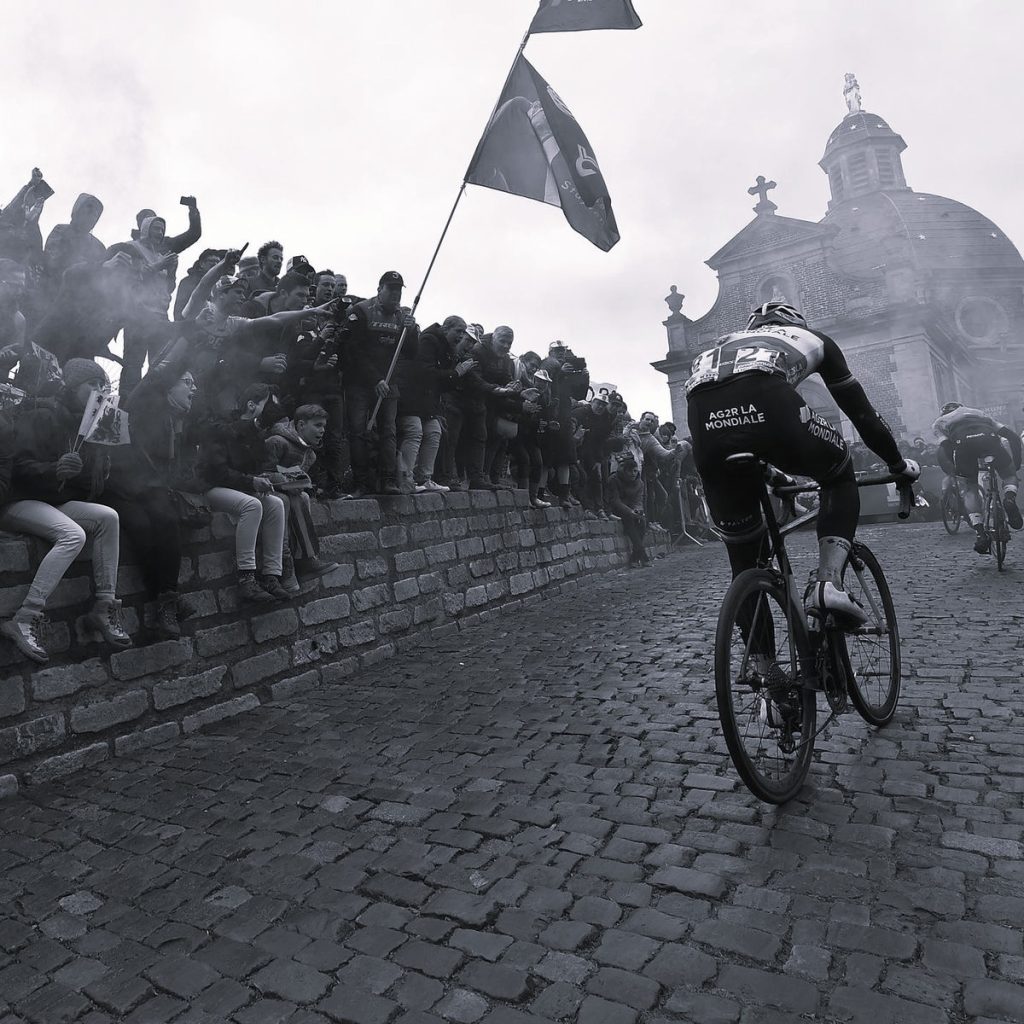
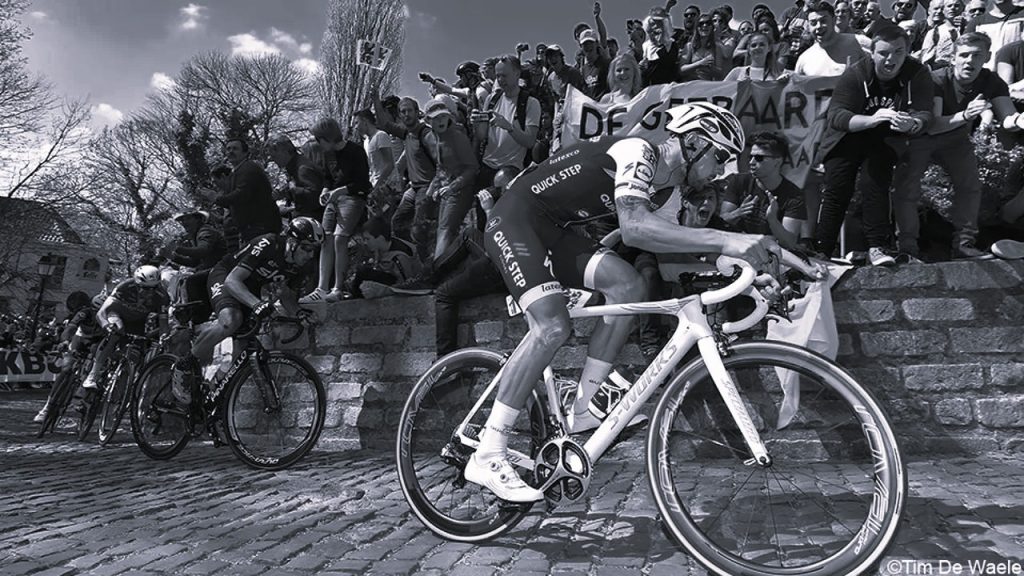
The Tour of Flanders is known for being a strategic and intense race. It covers 260 km of winding and hilly roads, cobbled sections, and about twenty “bergs” to conquer.
The favorites have multiple opportunities to plan their decisive attacks, but so do the outsiders, who sometimes lack recognition.
The tactical part of the race begins in the hilly region of the Flemish Ardennes, where teams and riders often have to react to unpredictable race developments, coupled with sometimes harsh weather.
The abrupt nature of the cobbled climbs favors attacking riders, which makes the Tour of Flanders an attractive race for the public and audiences.
Positioning is very important, and the front spots in the peloton are always highly contested, especially approaching the climbs where the roads become narrower.
Dropping back 15 places before tackling a climb often means, at best, a significant effort to get back to the front, and at worst, a fatal “chasse patate” (potato hunt) exercise.
Once the ascent is over, the route opens up to wider roads, exposed to wind and echelon effects, until the next climb….
The repeated efforts wear down the bodies, and the finish often comes down to a small group.
The drama of race incidents during certain climbs contributes to the extreme reputation of the race: Kopenberg, Paterberg, Muur de Gramont, and other Kwaremonts….
Knowing these roads and these “bergs” is a very valuable, even crucial, advantage. This is why local riders, often born on a bike in the heart of these roads, feel invigorated during the Tour of Flanders. They are at home and want to shine in front of family and friends.
Winning the Tour of Flanders guarantees eternal glory; it is the supreme reward for all the efforts made since childhood and cycling school.